

Have you ever been in a situation where, one minute, your system servers are processing transactions worth millions and the next thing you know, the power goes out? Again.
By the time PHCN restores power three hours later, you’ve lost more than just electricity. Customer transactions failed. Data got corrupted. Your team spent the entire afternoon firefighting instead of working. And that’s assuming your servers even survived the power surge when electricity returned.
This scenario plays out across Nigerian businesses every single day. The difference between companies that shrug off power outages and those that suffer catastrophic losses? Proper data center power and cooling infrastructure.
If you’re running business-critical systems, these aren’t optional investments. They’re survival requirements.
Why Power Infrastructure Makes or Breaks Nigerian Data Centers
Let’s be honest about Nigeria’s power situation. Grid electricity is unreliable at best and completely absent at worst. You can’t build business continuity on the hope that “NEPA” will behave itself.
Your data center needs multiple layers of protection, and each one serves a specific purpose. Think of it like insurance policies stacked on top of each other, except these actually pay out when you need them.
- Grid power is your primary source when it’s available (and that’s a big “when”). But the moment it drops, your UPS system kicks in instantly. We’re talking milliseconds here. Your servers won’t even notice the transition. The UPS buys you precious time while your generators fire up, which usually takes 10-15 seconds.
- Generator systems are your workhorse for extended outages. In Nigerian operations, “extended” is pretty much the default state. You’ll want fuel capacity for at least 48-72 hours of continuous operation, plus solid contracts with fuel suppliers who can refill you quickly. Because let’s face it, that first outage might be short, but the second one later that week definitely won’t be.
Here’s what most people miss: automatic transfer switches that handle all these transitions without human intervention. Manual systems sound cheaper until you realize they depend on someone being available, awake, and competent at 3 AM when systems fail. Spoiler alert—that rarely works out well.
- Power distribution units manage electricity flow to individual equipment racks, giving you monitoring and control at granular levels. This matters more than you’d think because different equipment has different power requirements and different tolerance for fluctuations.
How much power do you actually need? A small server room might run on 10-20 kVA. Enterprise operations can easily demand hundreds of kVA or even multiple megawatts. The critical part? Plan for growth now because expanding power infrastructure after you’ve built everything costs exponentially more.
Keeping Your Equipment Cool
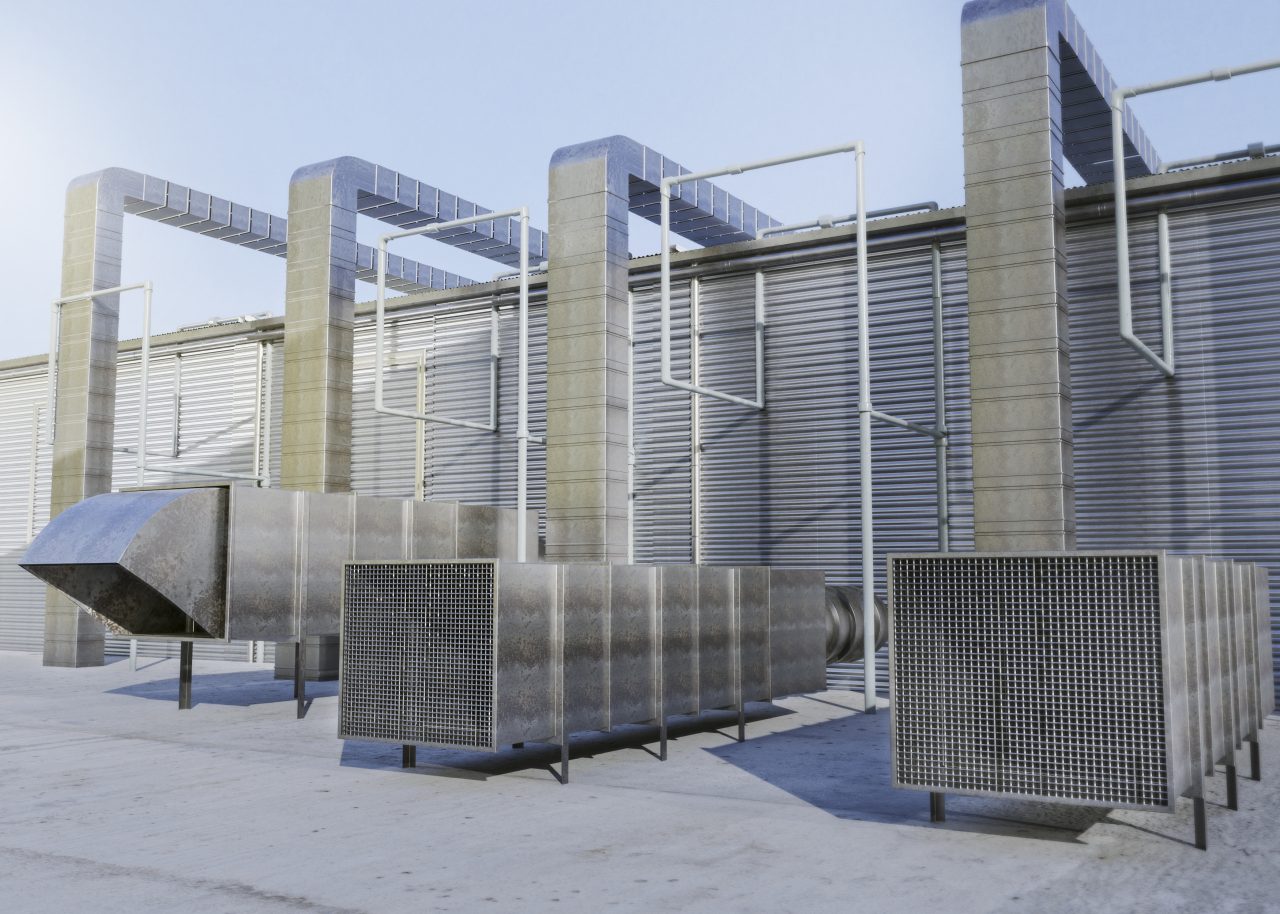
IT equipment generates serious heat, and that heat needs somewhere to go. In Nigeria’s climate, ambient temperatures regularly hit 35°C+; this makes cooling non-negotiable.
Standard office air conditioning won’t cut it for data centers. You need precision cooling units designed specifically for 24/7 operation that maintain temperatures between 18-27°C consistently. These systems don’t cycle on and off like office AC. They run continuously because your servers can’t take breaks.
- There’s a smart way to organize your equipment that immediately improves cooling efficiency. It’s called hot aisle/cold aisle configuration, and it’s beautifully simple. Arrange your server racks so cold air intake faces one direction and hot exhaust faces the other. Don’t let them mix. This alone can slash your cooling requirements by 20-30% compared to random equipment placement.
- You also need redundancy in cooling, just like power. If your primary cooling unit fails during peak Lagos afternoon heat, how long before your servers start shutting down from overheating? Not long. Most facilities implement N+1 redundancy. What this means is that, if you need three cooling units, install four. One handles maintenance or failures while operations continue normally.
Environmental monitoring systems act as your early warning system. They track temperature and humidity continuously throughout your facility, alerting you the moment conditions drift from acceptable ranges. This gives you time to fix problems before equipment starts failing.
Planning Infrastructure That Actually Works
The biggest mistake businesses make? Underestimating their power and cooling needs. You’ll either face expensive retrofits later or, worse, capacity constraints that literally prevent business growth because your infrastructure can’t handle it.
- Start with accurate capacity planning that covers current requirements plus realistic growth projections.
- Site selection matters enormously and should be carefully considered. Urban locations offer better grid infrastructure but cost more and may have space constraints.
- You’ll also need to consider generator fuel accessibility and physical security for both the facility and fuel storage.
- Don’t forget maintenance contracts for power and cooling systems.
- Perform regular tests to catch problems before they become emergencies.
- Load test your generators and check UPS batteries.
- Last but not least, verify that transfer switches actually work.
Finding out during an actual outage that your backup systems failed six months ago is not the time to discover maintenance gaps.
Building Reliable Infrastructure in Nigeria’s Environment
At Manifold Computers Limited, we’ve designed and implemented data center power and cooling solutions across Nigerian businesses for over 20 years. We understand the specific challenges (from power instability to tropical heat to fuel logistics) because we’ve solved them repeatedly across banking, telecommunications, and enterprise sectors.
We engineer redundant power systems sized appropriately for your operations, implement efficient cooling architectures that work in Nigerian climate, and provide ongoing monitoring and maintenance that keeps infrastructure operating when you need it most.
Whether you’re building new capacity or upgrading existing facilities, we deliver infrastructure that supports business continuity despite Nigeria’s challenging environment. Contact us to discuss your specific requirements, and let’s build something that actually works in real-world Nigerian conditions.